12/26/2024
Artificial intelligence (AI) is already redefining global industry, bringing a series of innovations that directly impact productivity, process automation, and decision-making. With technological advances and the growing use of intelligent machines, AI tools, such as systems specialized in data analysis, are helping companies analyze big data and optimize their operations. Insi, with its services and products based on artificial intelligence, has stood out in this scenario, helping companies predict failures, identify patterns, and generate scenarios to increase the efficiency of projects and customer interactions.
The use of AI has gained increasing attention over the past six years, impacting both people and companies. In 2024, 72% of organizations worldwide implemented this technology, a significant leap from the 55% recorded in 2023. As with any technological advance, artificial intelligence presents challenges with its impacts, especially regarding employee adaptation and the implications for the future of this technology.
The adoption of intelligent machines to replace repetitive tasks can reduce costs but also challenges companies to rethink their work models and enable employees to learn with new technologies. To minimize the effects of artificial intelligence on the workforce, it is essential to invest in continuous training and in developing skills that allow professionals to leverage the benefits of Industry 4.0 and adapt to changes in the job market.
Artificial intelligence in Industry 4.0: what is changing?
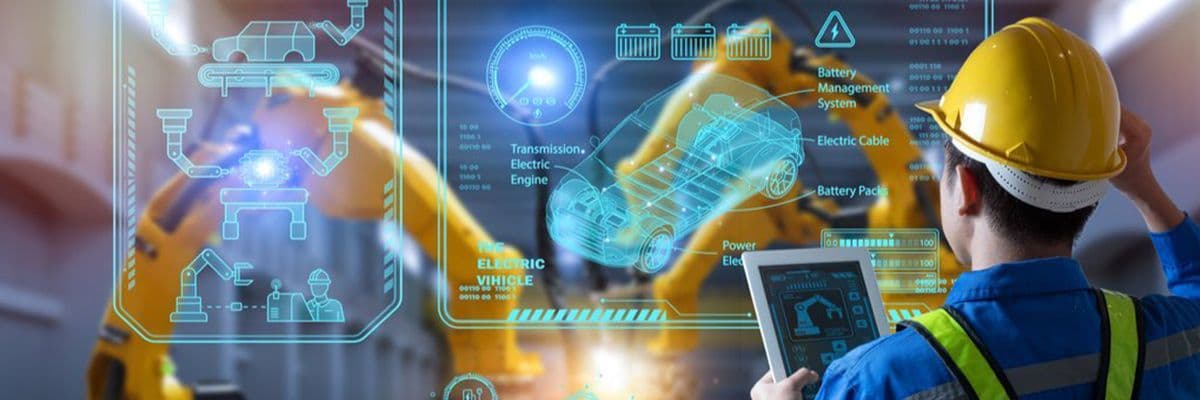
Industry 4.0 is characterized by the digitalization and automation of industrial processes, driven by advanced technologies such as artificial intelligence, machine learning, and the Internet of Things (IoT). In this scenario, AI plays a fundamental role, allowing intelligent machines to process and analyze large volumes of data in real time and make automatic decisions to optimize operations and improve results.
Artificial intelligence has a clear impact on operational efficiency and cost reduction for companies. The data analysis provided by AI systems makes it possible to identify patterns, improving decision-making and the execution of more assertive strategies. In this context, artificial intelligence tools automate repetitive tasks, allowing professionals to focus on more creative and strategically relevant activities.
“I believe all technology related to artificial intelligence is promising, as it is an emerging technology,” comments Amanda Santos, executive manager of the Insi Hub of Automation, Data, and AI.
In Insi’s case, its advanced solutions help companies analyze the large volumes of data generated during industrial processes, providing valuable insights that increase efficiency and reduce operational failures. This improves product quality and facilitates the implementation of new practices in Industry 4.0, a clear reflection of technological advances related to AI.
With the growing use of these tools, there is a need to understand how to mitigate the impacts of artificial intelligence on the workforce, ensuring that professionals acquire the skills needed to navigate this new technological environment.
Impacts of artificial intelligence on industry and society
The impacts of artificial intelligence on industry are increasingly visible, not only in industrial operations but also in several other spheres of society. With technological advances in artificial intelligence and the increasing automation of processes, companies are experiencing significant cost reductions.
With the rise of Industry 4.0, artificial intelligence and its impacts are increasingly evident in the transformation of production processes. Intelligent machines can analyze large volumes of data, increasing efficiency and offering solutions to optimize production. However, the impacts of artificial intelligence on society go beyond industry, directly affecting the labor market and challenging companies to rethink their training and adaptation strategies.
It is essential that organizations invest in continuous training and the development of new professionals specialized in data analysis and management, which are priorities when talking about AI, in addition to other functions related to artificial intelligence. How to reduce the impacts of AI on the workforce? The answer lies in integrating these technologies strategically, leveraging their strengths—such as process automation and data analysis—to make more assertive and future-ready decisions.
The growing presence of AI-based tools makes adapting to the new demands of Industry 4.0 an urgent need to ensure that organizations and their employees can thrive in a rapidly changing digital landscape.
Artificial intelligence: success stories in industry
Several industries are already reaping the benefits of applying AI to their processes. Factory automation, optimization of logistics chains, and the development of more personalized products are just a few examples of how artificial intelligence is being applied to increase efficiency and reduce costs. In addition, AI systems, such as machine learning algorithms, can predict equipment failures and optimize preventive maintenance, avoiding production interruptions.
As Amanda explained: “There are some examples [of using AI]. One of them is predictive maintenance, widely used in industries. With sensors on machines, it is possible to collect data that indicates when something is out of control. From this information, adjustments can be made automatically, or, if a part is defective, a machine stop can be scheduled. All this can be done automatically.”
Another example is computer vision, which works like a ‘human eye’ but using AI. This technology is much faster, scalable, and less prone to error than human observation. “It analyzes parts precisely and enables predictive maintenance through the analysis of equipment data, including older machines. These devices provide detailed information about their performance, allowing the application of predictive and preventive maintenance strategies with greater efficiency,” she adds.
How AI is helping to increase efficiency in industry
In fact, the impacts of artificial intelligence on industry are evident, especially when AI tools are integrated into business operations, enabling significant gains in efficiency, waste reduction, and productivity improvements. According to the National Study on Digital Evolution and Business Innovation, digitalization boosts operational efficiency by 41%, while innovation generates a 31% increase.
These figures illustrate how AI transforms business by processing large volumes of data in real time, identifying patterns and trends that could go unnoticed by humans. Insi, for example, uses AI systems to assist in data analysis, allowing companies to anticipate failures before they occur and proactively adjust their operations. These advances not only minimize downtime but also optimize processes, resulting in faster and more efficient production.
AI in decision-making: a revolution in management
This technology is redefining how strategic decisions are made in companies, bringing impacts of artificial intelligence on industry that go beyond the simple automation of tasks. In the industrial context, where agility and precision are decisive factors, these technologies offer indispensable solutions to optimize operations, reduce costs, and improve efficiency throughout the production chain. In this way, the adoption of AI not only enhances competitiveness but also reshapes business models, preparing the sector to face the challenges of a constantly changing market.
“In decision-making, when companies have a large volume of data and can make this information available, it can significantly support the decision-making process. For example, it is possible to identify bottlenecks in logistics operations, analyze transportation, inventory, and route data. Some companies, for example, use AI to predict delays in delivery routes and package distribution. This information helps make more assertive decisions,” explains Amanda.
Challenges of implementing AI in industry
Artificial intelligence (AI) has the potential to revolutionize industry, promoting significant advances in productivity and efficiency. However, its adoption faces a series of challenges that go beyond technological issues, also encompassing structural and cultural aspects. According to the study by Insi and Fundação Dom Cabral, 30% of the difficulties are related to organizational structure and culture, while 18% stem from the lack of profitability of digital projects and 14% from limited experience in their execution.
To fully explore the benefits of these technologies, companies need to overcome these barriers by adopting strategies that effectively integrate AI into their operations and promote team training.
Main challenges of AI implementation:
-
Resistance to change — many employees and managers still see AI as a threat, making its acceptance difficult;
-
Lack of training — there is a shortage of professionals trained to handle AI systems and data analysis;
-
Technological infrastructure — the integration between legacy systems and modern technologies such as APIs and Data Lakes is a significant obstacle for many industries;
-
High initial investment — the adoption of intelligent machines and AI tools requires considerable financial resources, both for implementation and maintenance;
-
Social impacts — the replacement of manual processes with automation raises concerns about the future of the workforce and job opportunities.
According to Amanda, AI can be a powerful ally in optimizing repetitive tasks, freeing professionals for more creative and strategic activities. “This can increase both productivity and work dynamics, as employees begin to focus on more valuable activities that involve more complex decision-making,” says the expert. “For example, automating processes such as shift planning in industrial sectors can optimize shift allocation, increasing efficiency and reducing costs.”
Overcome challenges and transform your company
To overcome any adversity and reap the benefits of digital transformation, companies need to invest in three essential pillars:
In addition to technological barriers, Amanda emphasizes the importance of addressing the human factor in the AI adoption process. “Every technological transformation faces resistance. That’s normal. To avoid this, companies hold workshops to show that technology will not replace anyone but will help. People need to understand that they must adapt and use technology to their advantage,” she concludes.
With a strategic approach that balances technological advances and the impacts of artificial intelligence on society, companies will be able to leverage the strengths of Industry 4.0, ensuring a more innovative and competitive future.
Digital transformation as the path to the future
Digital transformation {include link juice} is the foundation on which AI can be effectively applied. By integrating technological solutions into daily operations, companies can benefit from the impacts of artificial intelligence on industry, becoming more competitive and innovative. Insi offers AI-based solutions that help companies optimize processes and increase operational efficiency, providing essential tools to drive their progress in this direction.
The executive manager also highlights that AI can be a driver of innovation and personalization. “AI can truly support innovation and product development. It can speed up the process and also personalize. Streaming platforms, for example, personalize the content each person sees based on their usage. Behind that, there’s AI. Artificial intelligence can also be used in design and prototyping. This speeds up development and allows testing several designs and materials before producing the final version,” says Amanda.
How to reduce the impacts of artificial intelligence on the workforce
The impacts of artificial intelligence on industry are a growing concern, especially regarding the workforce. Process automation and the replacement of human tasks by machines can generate insecurity among workers. However, the solution to mitigating these impacts lies in continuous training and adapting job functions to align with new technologies.
Digital transformation should be seen as an opportunity for professional reskilling, not as a threat. Companies that invest in training and developing their employees will be better prepared to face the challenges associated with the impacts of artificial intelligence on industry while making the most of its advantages.
The future of artificial intelligence in industry
The impact of artificial intelligence on industry is undeniable. Increased productivity, cost reduction, process automation, and improved decision-making are just some of the advantages that AI can bring. However, the challenges are also significant, especially concerning workforce adaptation and the transformation of organizational processes.
Companies like Insi are leading this movement, helping industries integrate AI efficiently and sustainably, creating a more innovative and competitive future.
Now is the time for companies to start adopting these technologies and take advantage of their benefits. Digital transformation is the path to the evolution of industry, and Insi is ready to be your partner on this journey.
Dive deeper into the topic and prepare your company for the future. Download Insi’s e-book on the Applied Innovation and Artificial Intelligence Study and take the next step toward innovation.